Music, Room Tone or Silence: Three Ways to Shape a Quiet Scene
Music, room tone or silence can make a quiet scene feel intimate, uneasy or exposed; learn how each choice directs attention without dictating emotion.
The common mistake in a quiet scene is to add music as soon as the dialogue stops, as if a score must tell viewers what to feel. That can flatten the moment: a held look becomes an instruction rather than an invitation. Music, room tone or silence each shapes the scene’s texture, but none carries a fixed emotion on its own.
Music gives the quiet a second voice
A score can make a scene feel as though something is gathering beneath its visible action. A sustained note under someone folding a letter might lend the gesture weight, while a light, uneven melody could make the same task feel tentative. The image and performance still matter; music changes how viewers attend to them, not what they must mean.
Consider how much the music asks viewers to notice. A prominent tune competes with small sounds and facial details, while a sparse texture can sit close to the scene without covering it. A single instrument, such as a muted piano or bowed string, may leave more room for pauses than a full arrangement.
Music can also create a useful mismatch. A gentle melody over a character’s awkward effort to appear calm may make the performance seem fragile, ironic or simply more complex. The effect depends on timing, musical character and what the scene has established; a minor key is not an automatic signal of sadness.
- Keep score out of a pause when a breath or glance already carries the moment.
- Bring music in after a meaningful action if the audience should first register that action on its own.
- Let a musical phrase stop before dialogue resumes when the change in texture should be felt.
Room tone makes an environment feel present
Room tone is the steady, low-level sound of a space: the soft ventilation in an office, distant traffic through a window, or the faint electrical hum of a kitchen. It is not the same as a featured sound effect. Its job is to keep the acoustic setting perceptible while the scene stays still.
That background can make quiet feel ordinary, close or uncomfortable. A softly ticking clock may become conspicuous when characters stop speaking, even if it was barely noticed before. The change is partly in the listener’s attention: the sound can remain steady while the scene makes it newly significant.
Room tone also helps a setting feel specific without drawing focus to itself. A tiled corridor, a carpeted bedroom and a busy café have different acoustic qualities. If the background becomes conspicuously clean or changes abruptly between cuts, the space may feel less continuous, even when the image is visually consistent.
Choose ambient details according to what the scene needs viewers to notice. A distant lift bell can make a waiting character seem alert to the building; a refrigerator motor may make a domestic pause feel grounded rather than charged. Avoid adding a telling sound merely because the soundtrack seems empty.
Silence is a choice about what remains audible
Silence in screen storytelling rarely means that every sound disappears. It may mean the score drops out, the ambience is reduced, or only a close sound—such as fabric shifting—remains. The choice changes the perceived distance between the viewer and the scene.
Removing the score can expose a performance that music might otherwise cushion. A swallowed reply may feel more uncertain when heard against a plain room, but the same absence could also seem restful or attentive. Silence does not announce an emotion; it creates space in which the image, timing and remaining sounds can take more weight.
Be precise about what is removed. Cutting all ambience can make the world feel suspended, while retaining a faint air-conditioning hum preserves the room but leaves the characters unaccompanied by music. A close breath may feel intimate in one shot and intrusive in another, depending on framing and performance.
How do these sound choices change a quiet scene?
Does music always make a scene more emotional?
No. Music may heighten a gesture, create distance from it, or add a contrasting idea. Its effect depends on its musical character and its relationship to the action.
Is room tone the same as silence?
No. Room tone preserves a low-level sense of place, whereas silence usually describes an intentional reduction or absence of selected sounds. A scene can feel quiet while still carrying audible ambience.
When should a scene use no score?
Leave out the score when performance, framing or environmental sound already gives the pause enough shape. An unscored scene can feel plain, exposed, peaceful or tense; the surrounding choices decide which readings remain available.
Can ambient sound make a scene feel tense?
Yes, but it need not do so. A steady fan may reassure viewers that the room is ordinary, or its repetitive pulse may become unsettling when a character listens for something else.
Test the texture against the scene’s attention
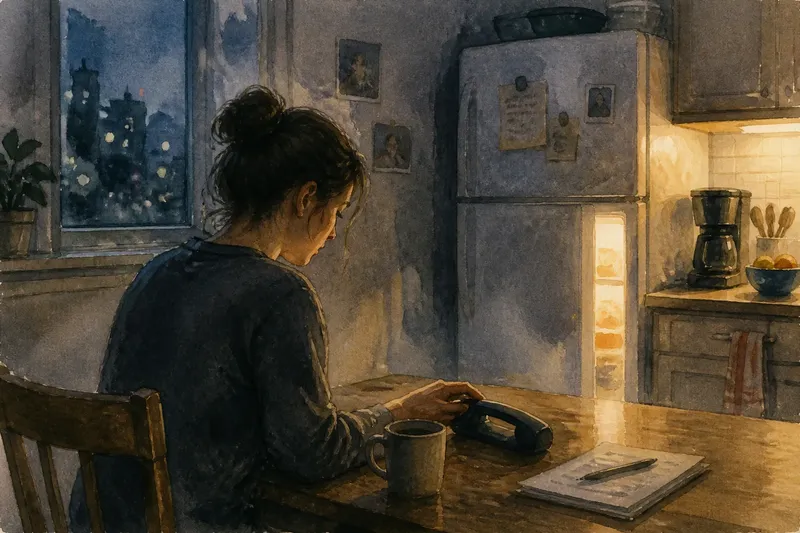
Imagine a character sitting alone at a kitchen table after an unfinished phone call. If a restrained piano enters as they turn the handset face down, the music may make the gesture feel reflective. If the score stays out and the refrigerator hum remains, the kitchen may feel stubbornly ordinary; if the hum and other background sounds fall away, the character’s small movements may seem unusually exposed. These are possibilities, not fixed meanings.
For a scene of this kind, compare sound choices against one clear question: what should viewers notice during the pause? Use music when a musical layer adds an idea, room tone when the space should remain present, and reduced sound when absence itself should become perceptible. Music, room tone or silence works best when it supports the scene’s attention without trying to settle its emotion for the audience.